How to choose an entry table
An entry table can make a handy landing place for everyday items. A few checks before buying can help it fit your home.
Measure the space first
Mark the table’s footprint on the floor with painter’s tape or paper. Walk through the entry and check that the door opens fully. Consider the space needed by everyone in your household, including anyone using a stroller or mobility aid.
Mind the depth
In a narrow hall, a shallow table may leave more room to pass. A deeper table gives you more surface area, but can crowd the route. Measure the hallway and subtract the table’s depth; check that the remaining space works for your household. Include overhangs, drawers and nearby doors in your measurements.
Try the measurements
Measure from one wall to the opposite wall, then subtract the table’s deepest projection into the hallway, including any overhang.
Illustration only, not to scale
12 in deep
30 in
Full hallway width: 42 in, wall to wall
AI-generated illustration; measurements are examples and the image is not to scale.
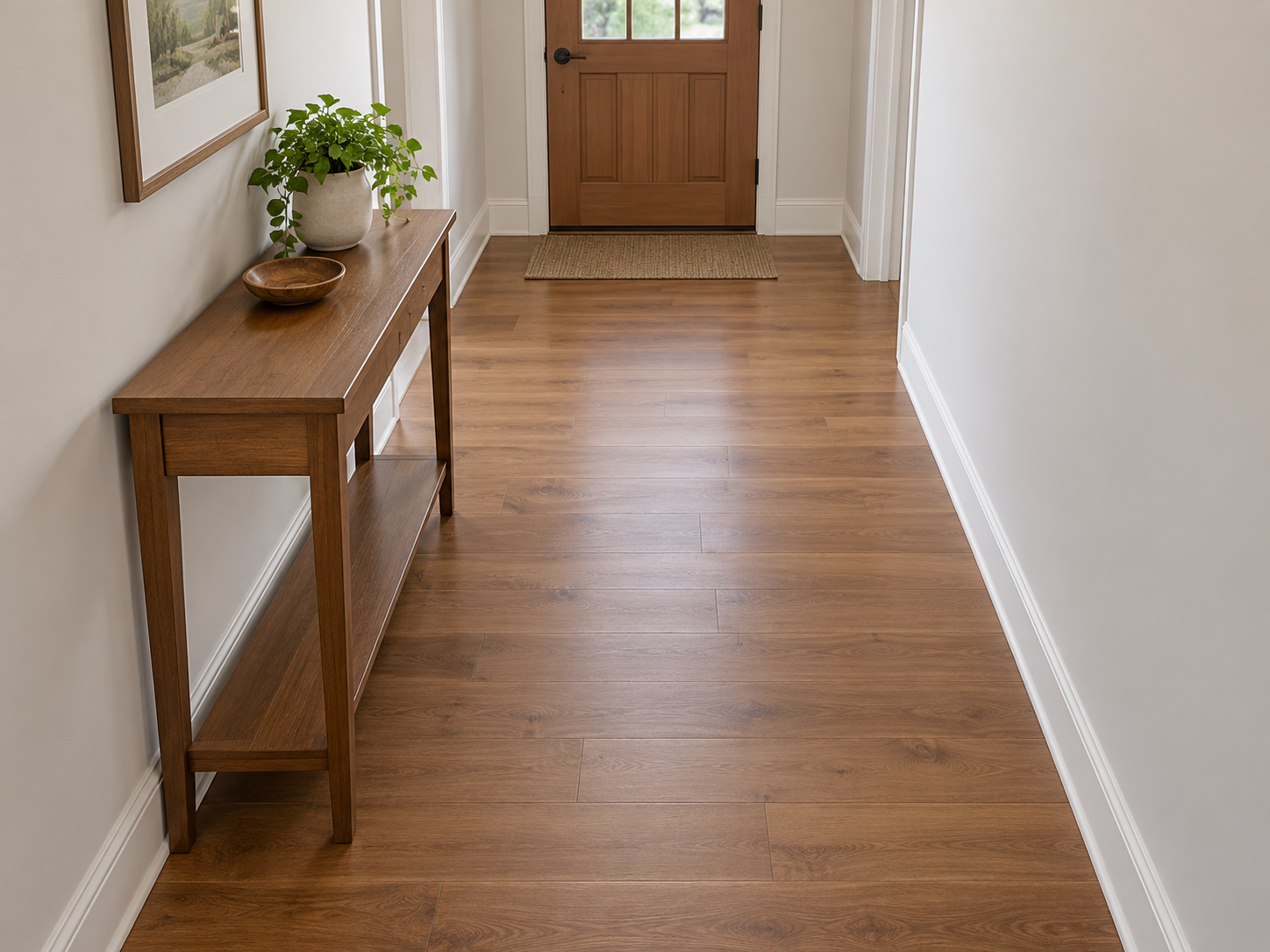
Full hallway: 42 in. Table depth is measured from the wall behind the table to its front edge. Remaining space is measured from that front edge to the opposite wall, before other obstructions.
Example only: 42 inches − 12 inches = 30 inches remaining before other obstructions. This calculation does not guarantee comfort, turning room or accessibility.
Use your own measurements: hallway width _____ minus table depth _____ equals remaining space _____. Note radiators, shoe racks and other obstructions separately; check door swings and turning space in the actual room.
Before you order
- Mark the footprint with removable tape and walk through carrying what you normally carry.
- Open the entry and closet doors and check the table drawer in its open position.
- Ask the seller for assembled dimensions, overhang and open-drawer depth, weight limit and anchoring instructions.
- Confirm package dimensions, delivery route and return terms in case the table does not fit.
Pick a style that fits
Look at nearby finishes, such as flooring, door hardware and wall colour. Choose a material that complements or contrasts with them. Slim legs can give a small entryway a lighter look.
Think about storage
Ask what actually lands there: keys, mail, shoes or bags. A drawer hides small items; a lower shelf or baskets can hold shoes and totes. A tray on top helps keep daily items together. Check the seller’s weight limit and any wall-anchoring instructions before buying.
Compare narrow console tables for small hallways →
Explore tables on RoamTables →